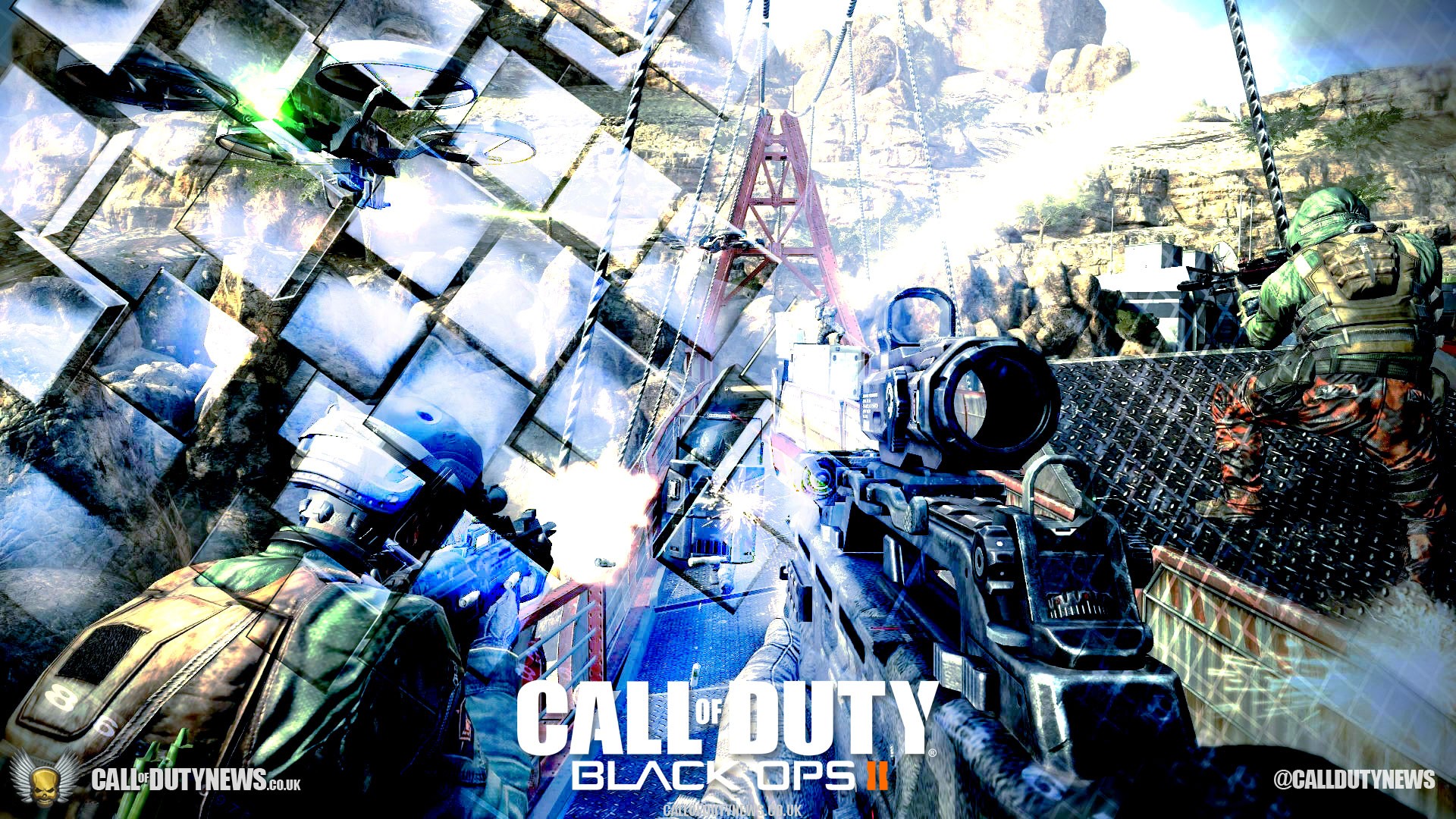
Author: DestroyRepeat

  • Black Ops II Mark Lamia interview – COD commentary – Metro

    Now that the multiplayer for this year’s Call Of Duty has been seen –
    and played – in public the series’ annual journey from Internet rumour to Christmas number one is almost complete. Every year Activision tries to prove that the new game is different enough from the last to justify a new purchase, but with Black Ops II the differences barely need to be exaggerated.

    The new near future setting (with a bit of ‘80s Cold War through in for the campaign mode) and Strike Force missions (which mix real-time strategy elements with branching storylines) are genuinely new ideas for the franchise. But the heart of the game is still the multiplayer and Black Ops II’s long term success, and record-breaking potential, will depend almost solely on whether it can keep gamers working on their killstreaks (now score streaks) and prestige levels.

    So at the recent Gamescom event in Germany we quizzed Treyarch studio head Mark Lamia about what makes Black Ops II’s multiplayer different, the reasoning behind the new focus on eSports, and how he and his team settled on the game’s new high tech toys and weapons…

    Video: Check out the
    Call Of Duty: Black Ops II multiplayer footage

    GC:
    Is not the problem with eSports the fact that it just isn’t much fun to watch other people play video games? Does someone already have to be deeply immersed in a game in order to want to do so?

    ML: No, I actually don’t think so. I think that if you watch a properly commentated and interesting production of Call Of Duty it is an interesting and fun experience. And not just to watch the game, but people start talking about the players and their tactics and they start following it like anything else. So I think our challenge was to make sure people could generate that kind of content. Give people the ability to do that, and as you’ve seen you give people tools and they get very creative. I mean our Theatre tool became very popular. You might argue that it’s not much fun to watch a game, which by the way I actually fundamentally disagree with…

    GC:
    Well, I’m speaking generally. I’ll admit there certainly are exceptions.

    ML: Just say we’re doing eSports and we’re not going to give you guys any tools, I think that road is a much more difficult road. So I agree that we had to spend time giving people some context. You watch a match and you need to know the score, you need to know the countdown timer, you need to know what’s going on in the battle space. And you need someone that actually understands the game, because each match is almost like a story – and who’s going to tell you that story?

    So even if you haven’t played the game I can see people being interested in that experience. Perhaps then they want to play or they just want to watch it.

    GC:
    But I have to admit I still found it quite difficult to follow exactly what was going on in the example match you had on Monday. Would a third person view not be more help when trying to gauge a player’s position in a map?

    ML: There is a third person view. You simply toggle it to third person and you watch it in that view and you’ll see people doing that, because it’s a different view of the battlefield.

    GC:
    So does that not help more with trying to portray the wider picture? I mean I’m just guessing, it seem like it would to me but I imagine you’ve actually tried it…

    ML: I have and what’s interesting… if I can take just two steps back. You said, ‘I didn’t follow it’. So if you think about the first time you watched a sport, the rules and the things that were going on… you couldn’t make complete sense of them.

    GC:
    I certainly couldn’t at the Olympics.

    ML: Exactly, and it took a few times watching it and someone explaining it to understand what was going on. And it was likely the commentators that helped you learn about the drama, the tension of what’s going on in there. And so I think that’s what’s going to be important. A commentator who is able to show the battlefield in different ways, whether it’s the map views so you can start to get an idea of, ‘Okay there’s people converging on a spot’. Did you play Hardpoint?

    GC:
    Yes.

    ML: I love commentating on the Hardpoint. I love starting out in the map view, you just see all the people going like this [pantomines a rush of people dispersing at random, or possibly a star going supernova – GC]. And you start to see what’s going on, and then you can head into someone – watch the battle. You can follow them in third person, you don’t have to go into first person at all, and do that. So I think that’s a creative preference that people will have. And maybe you will want to watch only matches that are in third person. There are certain people that only want that first person view, they want to see what the player’s seeing. It’s almost like having a cam on the player’s head, which is kind of interesting as well.

    So the fact that we can do that and give that control to the commentators, I think is a powerful part of this. And I think people are going to use this in amazing ways. We’re creating the functionality and the flexibility, but it’s up to the CODcaster to figure out the best way to tell that story.

    GC:
    With so much emphasis on the skill of the commentator is there a reward system for doing well? Or some kind of ranking system?

    ML: The world will do that for us, we know that. Great content… people will know.

    GC:
    But you won’t try to specifically reward them yourselves?

    ML: There may be ways that we can do that, but I’m not too worried about… the CODcasting feature is available in private games and custom games. It’s specifically set-up for people who… the other thing you can do is commentate a game that’s in the Theatre, after. Which people might do. If there’s a really great match that I want to commentate over, I want to CODcast that. You’ll be able to go back in and do that.

    So, the point is you’re going to see really great commentating, and you’ll probably see the whole range and spectrum in between, but I think what you’ll find is that people will gravitate towards high quality commentating. I think there’s different sorts of personalities that are going to emerge, there’ll probably be humorous commentators and… all kinds of stuff.

    GC:
    It’s not hard to imagine this being abused though. If someone starts CODcasting to people about something unpleasant at what point will you find out about it?

    ML: The Internet is on and people will put up content, right? That will have its own regulation.

    GC:
    So you’re just relying on users to report offensive content?

    ML: That is one way that clearly happens, but there are also – depending on where this content lands – there are also places that that is regulated.

    GC:
    One of the first things I noticed people talking about in regards to the multiplayer is whether you will have dedicated servers or not?

    ML: Yeah, so we have our own propriety networking model that we don’t disclose exactly how we do what we do. But on our PC game in the past we’ve had dedicated servers, so that’s not something that we’re not familiar with.

    GC:
    But will you have it on consoles?

    ML: It’s a propriety mode that we’re not discussing. But it’s a network model, it is complex, and to handle all these different kinds of modes and different situations…

    GC:
    Would you ever have a rent-a-server option similar to Battlefield 3?

    ML: I couldn’t even speculate on that.

    GC:
    So it’s not something you’d rule out?

    ML: We’re not talking about the networking model so I can’t get into that for you. But I… sorry, it’s just we’re not talking about it.

    GC:
    The whole Battlefield 3 situation does seem very odd though, it’s really divided that community…

    ML: [visibly bites tongue]

    GC:
    Okay, so at what point did you know you wanted a near future setting? Was that the idea from the start or just a natural result of wanting so many new weapons and equipment in the game?

    ML: It’s part of the creative process, coming off of Black Ops – even before Black Ops was finished, when we were in submission with the game we started talking about what it is we wanted to create with the next game. So job done on Black Ops, hasn’t released yet, team starts to discuss all the different things and clearly one of the major things that we wanted to do, we had creative ambitions on the campaign, that we were talking about the story and also in our multiplayer context – absolutely. We were talking about, ‘Look at how creative we made this ‘60s era, and all the creative weapons.’

    With a new era and being able to take some creative liberties and being able to put it out just out beyond where I think people can obviously predict where everything is going we can create entirely new gameplay, not just in multiplayer but also in the campaign. So let me give you a good example. The Dragonfire [a flying drone with a minigun attached to the bottom, previously known as the Quadrotor – GC]. Did you see that?

    GC:
    I seem to remember getting shot by it, yes.

    All: [laughs]

    ML:
    Did you see it in the campaign as well?

    GC:
    I did, yes.

    ML: In that video, in the campaign, you were playing that with the squad game mechanic – and it was a squad mate of yours. In the Strike Force level you could pilot it or fight it. In the multiplayer you could pilot it or you had to fight it, or get shot by it, as a score streak. So yeah, clearly what that means is new AI and fun new gameplay that we wanted to introduce, and wrap it around a fiction.

    I don’t actually characterise it as sci-fi. It’s science-based but we try not to go into the fantasy realm. Whether or not this is ever even plausible or possible hopefully it doesn’t feel fantasy.

    GC:
    It’s interesting you say that, because one of my favourite rants is how so many sci-fi games have lost the ability to suspend disbelief. It always amazes me that in Mass Effect they’re wandering around with machineguns, even though they seem to have broken every law of physics known to man.

    ML: So we’ve got the microwave energy, which is sort of…

    GC:
    Exactly, that’s more sci-fi than most sci-fi games, and it was the same in the recent Ghost Recon game – which many people dismissed as too sci-fi even though it was clearly quite well researched. Are you trying not to be too fantastical specifically because you recognise this reticence to suspend disbelief even in a video game?

    ML: No, no. If that was our goal we could very easily do it. I think that was actually a very interesting challenge for us, we were making a game that was in the near future not far out future. And so it was actually a big creative challenge to make sure it was like, ‘Okay, we want to have a game that is not too far out but far out enough that there will be a lot of new technologies that will come into play’.

    GC:
    But what made you place those limitations on yourself? Was it because it would change the gameplay too much?

    ML: Well, it would change the gameplay significantly if you had energy-based weapons versus projectile-based weapons. But our game, that we wanted to make, we wanted to have projectile-based weapons, right? It does change the gameplay, a lot, if you do have a lot of energy-based weapons. So that’s a creative choice that we made. I hear what you’re saying and if we want to make a sci-fi game we can do that, but that just wasn’t what we wanted to make.

    GC:
    In terms of the weapon attachments in particular, where they all based on research or where you just making up things that seemed cool or would aid the gameplay?

    ML: Yes! Yes, all those things. All those things. There’s a balance.

    Mark Lamia - sending Call Of Duty into the futureMark Lamia – sending Call Of Duty into the future

    GC:
    The Millimetre Scanner for example, that lets you see through walls, is that a real thing?


    ML: So that’s a very good example. So how would you guys come up with that? That seems pretty far out there. Here’s how we do it: so when we want to come up with a cool gameplay mechanic and a future-ised piece of technology we actually create internally our own story for how that came about, and is that even remotely possible? And then if we’re not sure or not we’ll decide whether we’ll take creative licence or not.

    Here’s how we deal with that one: Millimetre Wave Scanner. You flew here today, did you go via one of those booths where you had to hold your arms out?

    GC:
    Well, no but I’ve been in the American ones like that.

    ML: So, the inspiration for the Millimetre Scanner was literally drawn from that. Except right now…

    GC:
    They’re big machines.

    ML: They’re big machines! Well, as processing power increases and we know that as things become more powerful you can get things in smaller form factors. That’s the creative process, that’s entirely made up – by us – but it draws upon an inspiration from today. What we try to do is take today and go and say, ‘Okay, where can we see some of these technologies going? And does it make sense for gameplay?’

    Sometimes we start with gameplay and back into it, sometimes it starts with inspiration of something out there and, ‘Wouldn’t it be cool in gameplay?’ and sometimes it might make sense. But that’s a perfect example you used right there.

    GC:
    I assume this question must come up a lot, but I don’t think I’ve ever asked it of any of the Call Of Duty guys: do you ever intended to include pilotable vehicles in Call Of Duty multiplayer?

    ML: We have done. Have you driven the A.G.R. [the remote control tank –GC], have you flown the Dragonfire? The core gameplay is that you’re a soldier on foot, but we have these gameplay mechanics that allow you to control…

    GC:
    Okay, yeah. I guess. But is there some technical limitation preventing you from having larger vehicles or levels?

    ML: No.

    GC:
    You won’t get to the next gen and think, ‘Oh, we can have vehicles now!’

    ML: No, no. No. So let me give you a perfect example of that. So, four years ago we made a game called Call Of Duty: World At War. I don’t know if you’re familiar with that. Did you play the multiplayer? Did you drive the tanks?

    GC:
    Ah…

    ML: Let me go back six years ago and Call Of Duty 3. You could drive vehicles in that too and that was our first game of this generation for Call Of Duty. So we are more than capable, it’s just not creatively where we’re headed with the game design. So it is not a technical issue, it’s just a very complex game where you have to make choices about where you’re placing your emphasis. We do have vehicles, they are more rewards – they’re set-up almost in a way like mini-games that you get to play, in some instances. We have them in the campaign but the core experience is weapon in hand, boots on the ground.

    GC:
    So will Call Of Duty always be close combat, infantry warfare?

    ML: I have no idea what we’re going to do after this. But it’s not a technical limitation of our technology or the hardware. It’s pure choice.

    GC:
    And just finally, you’ve already said that 2025 is the only setting for the multiplayer but is there not a thought to have at least some maps that use the ‘80s setting from the campaign story? I mean the music would be better for a start.

    All: [laughs]

    ML: [laughs] As a child of the ‘80s I couldn’t agree with you more on the music part.

    GC:
    But all you have to do is have a DeLorean or something coming in and you can still use the same weapons.

    ML: [laughs] The multiplayer, because it’s a systems-based game and we have all the fiction tied into it with the technology and everything – it is set for the year 2025. But as you know some of the weapons that we’ve had have been around for many, many years and you’ll still see some of those weapons in that timeframe. It’s really about how they’ve evolved and the technology that’s going to be put on weapons. That was kind of our creative approach to this.

    You’ll see some future-ised weapons, you’ll see some weapons that you can see today that have been around even for a little while. Just right now if you look back you can see an AK-47 which has been around for a long time but has also evolved. So you’ll have some of those things in the game.

    But I think what’s interesting is that you’ve seen the Yemen level, well for all intents and purposes that level, the environment around you is probably a hundred years old at that point. But there’s bits and pieces in some of the rooms that shows you there’s some technology around. So when you say ‘Go back to the ‘80s’ it’s not necessary. Our future fiction for the multiplayer is set in the year 2025 so we can have all that stuff available. So it’s a creative choice.

    GC:
    So there’s no multiplayer level set during a Pet Shop Boys concert in the ‘80s?

    ML: [laughs] No, no there’s not.

    GC:
    Confirmed!

    All: [laughs]

    GC:
    Okay, great. Thanks for your time, I know you overran a bit there.

    ML: No problem, that was good – I enjoyed it.

    Formats: Xbox 360, PlayStation 3, and PC

    Publisher: Activision

    Developer: Terminal Reality

    Release Date: 2013

    Video: Check out the
    Call Of Duty: Black Ops II multiplayer footage

    Thoughts? Email
    gamecentral@ukmetro.co.uk
    or leave a comment below

  • Call of Duty: Black Ops 2 – multiplayer hands-on preview – The Guardian (blog)

    Is there another franchise in the shooter genre that casts a longer shadow than Call Of Duty? Certainly Activision’s FPS mammoth draws as much ire as it does admiration from the gaming community, but you can’t argue with the statistics. Call Of Duty shatters through unit sales records as a matter of course, year in, year out. The last entry in the series, Modern Warfare 3, grossed a whopping $775m (£495m) in its first five days of release and its predecessor tops the franchise’s highest-seller list, having shifted more than 23m copies to date.

    That last little piece of information probably weighs heavy on the collective minds at Treyarch, the developer behind the upcoming Call Of Duty: Black Ops 2. Since the first Black Ops is the biggest selling CoD entry of all time, expectations for its sequel have been pumped up to the point of absurdity. Whether or not Treyarch can top its personal best depends largely on Call Of Duty: Black Ops 2 living up to the hype, and a big part of this – the silver bullet, in fact – is down to the game’s crucial multiplayer mode.

    First, the bad news: if you were a fan of the wager matches in Black Ops or, indeed, its in-game currency, which allowed some non-linear progression through the unlockables – too bad! They’re now things of the past. Kill Streaks have gone too, although they exist in a more malleable form as Score Streaks. The big push with Black Ops 2, seems aimed at delivering as much customisation to the player as possible without breaking the overall balance.

    The Class Creation tools have been overhauled somewhat. Instead of a set rubric in which players are forced to pick a certain number of perks, weapons and pieces of equipment, in Black Ops 2, they’re assigned 10 character points to spend as they please. Let’s say, for example, you’re a CoD player who hardly ever uses their secondary weapon. Well, in Black Ops 2, you don’t need to select one; you simply cash it in for some extra points, and you can spend them something else.


    Call of Duty: Black Ops 2

    Players can also buy up to three Wildcards (each costing a point), which allow them to bend the rules and configure their class further. The “Perk Greed” Wildcard, for example, allows players to select two Perks from the same category – such as Hardline and Flack Jacket. Wildcards can also be used to buy more weapon attachments or extra grenades. To maintain some sense of balance, there are upper limits on what the player can buy – you can’t stroll into a match with five guns, for example.

    Once in a match, players will notice that the rejigged Score Streak system is more user-friendly than its Kill Streak predecessor. In the past, players had to string together a series of kills in order to call in useful items such as UAVs, rocket bombardments and K9 attack dogs. Now they’re rewarded for what Treyarch has labelled “positive gameplay”. Each Score Streak piece of equipment is assigned a numerical value, and once the player earns that value through their actions, the equipment is available for them to deploy. So, for example, if a player captures a flag (100pts), shoots an enemy on their way back to base (100pts) and then plants their flag at homeplate (100pts) they can then call in a UAV drone (300pts) having only fired one shot.

    The new equipment in the game is an absolute blast to use. A lot of the guns in the game look like revamped versions of the weapons in Modern Warfare, but there are some completely unique items in Black Ops 2’s arsenal too, befitting its slightly futuristic setting. These include the Assault Shield, a metal riot shield that can be used as deployable cover, Shock Charges, that temporarily stun targets and the Millimeter (sic) Wave Scanner, that allows players to see stationary targets through walls (think about that, campers).

    The Score Streak rewards are equally satisfying. There are obviously the tried and tested assets, such as Care Packages and UAVs, and there are some re-skinned features too – an attack drone mini helicopter presents a smaller target, but it pretty much does the same thing as the Harrier from MW2.

    Then there are brand new items, such a remote drone that the player flings into the sky as soon as they unlock it, and it circles the battlefield until it finds a target – making it pretty much a guaranteed kill. There’s also the HellStorm Missile, which works the same way as a Predator Missile, except that it can split off multiple warheads, decimating enemies moving together in a group. There are even a couple of non-lethal items such as The Guardian (no relation), a turret that emits a microwave pulse that slows down opponents. Stick this baby in the right section of the map and you can create a bottleneck filled with a lot of downed enemies.


    Call of Duty: Black Ops 2

    Players also have the option of taking control of some of their AI equipment remotely. Players can switch to the HUD of items such as attack drones or remote turrets and better direct their fire against foes. They can also leave the equipment to work remotely, if they so choose.

    There were four maps available at the multiplayer reveal: Cargo, Yemen, Turbine and Aftermath. Aftermath and Cargo were set in LA, the former featuring a decimated downtown area, and the latter set in a container bay at the docks. Yemen is a classic street battle set in a small town, while Turbine – my favourite of the lot – takes place in a canyon around a downed cargo plane. All of the maps look exquisite and favour the close-quarters run-and-gun style of gameplay COD is known for. Aside from Team Deathmatch, we were allowed to play the new Hardpoint match, which is essentially a version of King Of The Hill from Gears Of War 3.

    Everything the player does in the online mode earns them XP, and each new level offers them a new unlockable item. There are 55 levels in the game, and we’re told that hitting the top level won’t be enough to unlock all of the mode’s content. This means that in order to obtain shiny new perks, guns and equipment beyond level 55 requires players to Prestige – and there are a further ten levels of that available. There are also a ton of medals, tags and baubles in the mode for players to collect for, as Treyarch puts it, “doing something cool in a match”.

    Players now also have the option of playing in ranked matches, as one of the key pushes for Black Ops 2 is in the direction of the eSports market. To that end, they’ve introduced League Play, which offers skill-based matchmaking and seasonal ladders. If you start playing in the online Leagues, Black Ops 2’s online mode will record your skill level, size you up, and plonk you in a league with players you have a chance of beating. Once you get into the habit of trouncing opponents on a regular basis, you move up to the next League in terms of skill-level. Quitting matches in League Play is punished harshly, by the way, as Treyarch doesn’t want highly skilled killjoys to be able to drop down to the lower leagues and mess up anyone else’s experience.

    Treyarch has also furnished its League Play mode with a new toolset allowing players to commentate on games, rather than play in them. The designated commentator – or CoDcaster – has an array of play-by-play features to allow them to fill out their uploads including Score Panels, Name Plates and different views they can use to follow the action. Treyarch says it has a streaming component in development, which will allow CoD-heads to follow matches on their tablets.

    Of course, whether eSports proves a substantial draw for the CoD faithful remains to be seen, but even without it, the online mode looks set to rack up impressive audience numbers. Overall, the focus in Call Of Duty: Black Ops 2’s multiplayer is on quickness and customisation.

    Treyarch wants players to dive into this mode, work out their play preferences and then level up as quickly as possible. This doesn’t mean that it’ll be easy to become an elite player, but it makes Black Ops 2’s online mode arguably the most accessible of its type in series. It’s a sharp, brutal and compelling experience, and all of this bodes well for Black Ops 2’s chances when it’s released this November.

  • Black Ops II Multiplayer Preview – TheGamersHub

    I’ll get this out of the way from the start: I don’t see the attraction of the Call of Duty franchise, especially Black Ops. After Call of Duty 2, I’d say that Call of Duty 4: Modern Warfare is the best entry in the franchise as it retained realism and didn’t go for Hollywood thrills and spills over authenticity. With Black Ops II authenticity has definitely gone completely out of the window and so I find myself being even less interested than ever before. That being said, Black Ops II‘s multiplayer definitely felt the most enjoyable to play in a very, very long time.

    With Modern Warfare 2 having been the last in the CoD franchise that I played for any length of time – and didn’t cause me to throw the game across the room in a fit of rage at how bat-$h!t crazy and implausible it was – playing BOps II was a little uneasy for me with its raft of fake weapons, idiotic ‘perks’ and strange killstreak bonuses. Indeed, many of the features were completely new to me, yet for all I know they could have been in the game from the very start – Either way, BOps II was actually quite fun despite it not having changed an awful lot at all.

    Playing on an Xbox 360 build of the multiplayer, I played two matches: one four teams of three deathmatch, and a two teams of six “Hardpoint” match – which is nothing more than a King of the Hill mode. The latter played out in a destroyed downtown LA level known as “Aftermath” while the former took place in a mountainous research facility known as “Turbine” – both were relatively straightforward CoD maps with many paths and cubby holes to hide in.

    As usual if you’re team’s awful then you’re going to have to carry them and it’s rare for people who are flung together to want to work as a team – essentially reenforcing some of the reasons why I decided to stop playing the series.

    For those wondering what this game looks like, I can only direct them to look at the last CoD game and then imagine that looking practically the same and then you’ve pinned down the visuals found in BOps. From afar the game did look superb, however, when playing sat right up close to the screen – as Gamescom had positioned players in each booth – those smooth edges become bulky and jagged. It’s likely that all the footage shown of the game came from the much better looking PC build – however that’s no more than speculation on my part.

    Ultimately, I left the oppressive black walls of BOps II booth and monitors seeing a sea of utterly enthralled players – and a queue that stretched for hours – feeling that, even though it felt better to play than before, this was still going to be a title that sold by the bucketload and there isn’t any way anyone can convince them otherwise.

  • Call of Duty: Black Ops Zombies – Pocket Gamer

    Call of Duty: Black Ops Zombies Xperia Play, thumbnail 1

    In a fashion that’s disarmingly reminiscent of the undead hordes from which it takes its name, Call of Duty: Black Ops Zombies has shambled rather than sprinted to Xperia Play. The iOS version is half a year old now, although it still stands up as a perfectly decent FPS experience on mobile.

    That naturally applies to this Android port as well, if not more so – the Xperia Play’s dedicated gaming input and twin-pad setup mean that it offers much more intuitive control than its entirely touchscreen-driven iOS forerunner ever could.

    Walking dead

    Movement is on the left touchpad and aiming is on the right, with the shoulder triggers and fascia buttons handling other controls, such as firing, iron sights, reloading, weapon selection, melee attacks, and interaction with the environment.

    While this arrangement makes CoD: BLoPS: Zombies feel more akin to its console counterpart, it takes a bit of tinkering to get it working correctly. For some reason, the developers have set the sensitivity of the touchpads far too low.

    Even when pushed up to maximum, the controls never feel swift enough. 360-degree turns seem to take an age – especially when you’re being assailed from all sides by ravenous ghouls.

    Night of the living dead

    Aside from that, the overall experience is very much the same as it was on iOS – you have to survive wave after wave of zombies, upgrading your weapons, patching up weak spots, and unlocking additional sections of the level along the way.

    If you’ve played the home console version then you’ll be familiar with the drill – what we have here is essentially a scaled-down mobile companion piece, a game that doesn’t attempt to outstretch itself and yet offers a reasonably faithful approximation of the full-blown console edition.

    The visuals are quite drab, with a crushing abundance of grey and brown occupying the screen for the vast majority of the time.

    Locations and character models are basic, boasting none of the detail or flair seen in more recent examples of the genre, like MadFinger’s Dead Trigger.

    Despite these presentation woes, there’s still a sense of style about the game. The comic book-style menu system is a highlight, accompanied by spooky horror-style music that does much to raise the tension before you dive headlong into the slaughter.

    Zombie Flesh Eaters

    If you know for a fact that you have three friends who will regularly hook-up for multiplayer sessions (local only – there’s no online play) then the £4.99 currently being charged for CoD: BLoPS Zombies is easier to stomach.

    If you’re likely to be flying solo, the game becomes significantly harder to recommend. Much of the appeal stems from the thrill of keeping yourself and your team-mates alive during the unrelenting zombie assault. With that element removed, CoD: BLoPS Zombies loses some of its spark.

    Having said that, Xperia Play owners starved of triple-A releases which harness the power of their handsets will probably be willing to endure a slightly less compelling single-player romp in order to give their phones a much-needed workout. CoD: BLOPS Zombies isn’t perfect, but it’s just about worth the six-month wait.

  • Call of Duty: Blacks Ops 2 to feature overhauled unlock system – CCL Online

    Call of Duty: Blacks Ops 2 to feature overhauled unlock system – CCL Online

    The build-a-class mode in the multiplayer of the forthcoming first person shooter Call of Duty: Black Ops 2 will have an overhauled unlock system.

    At a preview session in Cologne hosted by publishers Activision, gaming website VG247 got their hands on the multiplayer, revealing how there will be ten gear slots that can include any combination of weapons, perks and killstreak rewards.

    Every time gamers level up they will be able to choose one of seven new items to unlock. There are few restrictions too, so gamers do not have to fill specific slots with a primary weapon or a perk, for example. If players want to forego a primary weapon for a perk or “wildcard” ability, then that is possible.

    These abilities allow gamers to modify the way a weapon works by adding a different alternative fire mode, have an extra attachment or even take a second perk from one of the three perk tiers.

    If players decide they want something else, they can trade weapons or items, get back some of their allowance and then use it on something else. They will find their ten slots get filled up rather quickly.

    The system should add a lot more strategy to the Call of Duty: Black Ops 2 multiplayer, with players really having to think carefully about what to pick from over 100 items and abilities on offer.

    Blacks Ops fans will be pleased to hear the much loved Zombie Mode is returning in the sequel. In an interview at Gamescon, Mark Lamia, the studio head at developers Treyarch revealed that the mode will be bigger in every way over its predecessor.

    The world will be much larger and there will be new gameplay mechanics to create a more in-depth experience. In addition, up to eight gamers will be able to play in the Zombie Mode at once, up from four in the original. Further details are expected to be announced on the mode in the near future.ADNFCR-1220-ID-801432327-ADNFCR

    Source Article from http://www.cclonline.com/article/801432327/News/Desktop-PCs/Call-of-Duty-Blacks-Ops-2-to-feature-overhauled-unlock-system/
    Call of Duty: Blacks Ops 2 to feature overhauled unlock system – CCL Online

  • Battlefield and Call of Duty: the great frames per second debate – Eurogamer.net

    60 frames or not 60 frames? When it comes to military first-person shooters, that is the question.

    Call of Duty and Battlefield – the top two games in the genre – are rivals at the till, but they’re also rivals when it comes to the number of frames that glisten from your television every second. And in this regard, we have two very different philosophies.

    For Battlefield, Swedish developer DICE targets 30 frames per second on console. For Call of Duty, Treyarch and Infinity Ward have are locked at 60 frames per second. Most would agree that the higher the frame rate the better the experience, but, as with much of game development, working out which is best is about more than numbers.

    “It’s a choice you make,” DICE executive producer Patrick Bach told Eurogamer. “What is the experience you want to create? Is it more important that it’s 60 than you have all this other stuff? And how many players do you need to create that experience? Some games are 60 with fewer players and no destruction and a static world and no vehicles. Other games are the opposite. In the end, everything is a compromise. You can’t make a game that does everything always. It’s more about, what is the game you want to create? What is more important for you?”

    Bach is, of course, referring to Battlefield’s trademark destruction, huge maps and high player count. It is what sets the series apart from chief rival Call of Duty, and is what’s most loved by its loyal fans. In fact, so treasured is Battlefield’s wide open spaces and vehicular carnage that many fans slammed the Close Quarters Battlefield 3 add-on for being too much like Call of Duty.

    Some people complain because it’s a number, and you can compare numbers. And then there are a few people who complain because they say it’s a worse experience. That group has their needs and their urges, and then you have the other group that says, you know what? I’d rather have destruction, vehicles, graphics and audio because it’s fun.

    DICE executive producer Patrick Bach

    On PC, of course, frame rates are limited only by the power of the hardware. But running at 30 frames per second is unavoidable on console, according to DICE.

    “On console we have to make some compromises,” Bach said. “We love our vehicles and we love our destruction and we love the pretty graphics and the awesome sound. We think 30 is pretty decent.

    “Some people complain because it’s a number, and you can compare numbers. And then there are a few people who complain because they say it’s a worse experience. That group has their needs and their urges, and then you have the other group that says, you know what? I’d rather have destruction, vehicles, graphics, audio because it’s fun. So, it’s a compromise.”

    On the flip side of the coin is Call of Duty, which speeds along on console at 60 frames per second. But then, Call of Duty’s maps aren’t as big as Battlefield’s, and don’t house as many players, and the level of destruction is not as comprehensive.

    For Treyarch game design director David Vonderhaar, currently working hard to get Call of Duty: Black Ops 2, out the door, the decision to go with a high frame rate is the result of one thing: latency.

    “We think 60 frames is super essential,” he told us. “Any time you have any kind of input latency at all, players can feel that. I’m pretty convinced Call of Duty is as popular as it is because of how fluid it can feel.

    “You can feel the difference, and we go to a lot of trouble to try to keep the game running at 60 frames all the time.”

    As we approach the end of the lifecycle of the current generation of consoles, thoughts turn to the next Xbox and the PlayStation 4, expected at some point next year. Will developers be able to get games running at 60 frames per second on the next generation while, hopefully, improving destruction, player numbers and all the rest of it?

    “Maybe,” Bach said. DICE, which is working on Battlefield 4 – possibly as a cross-generation title – won’t be drawn in detail on the future. But what it does know is that the current generation of consoles is incapable of running the Battlefield 3 experience in 60 frames.

    “No, I think it’s impossible,” Bach said. “You have to do compromises somewhere. Then the discussion should be, where would you be willing to compromise? You can’t do exactly what we’re doing in 60, because then we would have done that or someone else would have done what we’re doing in 60. But you don’t see that.”

    For Vonderhaar, whatever the future brings, Call of Duty will remain a 60 frames per second game. “It’s no doubt a super challenge,” he said. “It’s always a challenge. It’s always a series of compromises between 60 frames and whatever else. But it’s in our blood. You’re playing some games that look pretty stunning. So it’s possible, it’s just complicated and takes time and is difficult, but that’s what we do here.”

    We think 60 frames is super essential. Any time you have any kind of input latency at all, players can feel that. I’m pretty convinced Call of Duty is as popular as it is because of how fluid it can feel.

    Treyarch game design director David Vonderhaar

    Source Article from http://www.eurogamer.net/articles/2012-08-21-battlefield-and-call-of-duty-the-great-frames-per-second-debate
    Battlefield and Call of Duty: the great frames per second debate – Eurogamer.net

  • Treyarch hopes Black Ops 2 multiplayer changes will make Call of Duty a team game again

    Treyarch hopes Black Ops 2 multiplayer changes will make Call of Duty a team game again

    Treyarch hopes the changes it’s made for the multiplayer portion of Black Ops 2 will make Call of Duty a team game again.

    The developer has replaced Kill Streaks with Score Streaks, and to unlock them you need to gain score, granted for kills and team-benefiting actions.

    It’s also implemented a new skill-based matchmaking system called League Play that will see players promoted and relegated into divisions for competitive play.

    “When we play you really start caring again,” game design director David Vonderhaar told Eurogamer. “We’re back at the studio and we’re forming up teams, and you start to take on a role. It’s no joke. I was the goal tender. I stayed back and protected our C Domination flag. That was the entirety of my job. I focused on doing that job and doing it well. And even though I wasn’t in every single fight all the time and running out to my death, I was setting up strategic defensive positions and thinking about it a lot. It was just an incredibly fun way to play.

    “I think players are going to start caring about winning and losing again, and are going to go out of their way to work together. That to me is what I found now we’re coming into the home stretch. All these places in the game where we subconsciously did that: the League Play feature does it. Multi-team does the same thing. I just think this can be a team game again.”

    We asked Vonderhaar if Call of Duty had lost the feeling of team play – perhaps rival Battlefield’s greatest attraction – following its incredible growth in popularity since the release of Call of Duty 4: Modern Warfare.

    “There’s a lot of people, right?” he said. “There are a lot of people who like to play. Now you can spread this out. You can get players trained up in combat training. You can get guys who just want to go out and wreck in the public matchmaking. You can get guys who want to try hard and work as a team over in League Play. I think that’s a great thing.”

    Score Streaks were highlighted by Treyarch during a Gamescom press conference as one of the chief changes made to multiplayer. But some have said they are nothing more than Kill Streaks with a different name.

    [Read more]

  • Black Ops 2 Multi-Team Modes Revealed

    Black Ops 2 Multi-Team Modes Revealed

    “Multi-Team is a new class of game modes in Black Ops 2. Instead of two factions going head-to-head, multiple teams of players take to the playing field at the same time, each looking to come out on top. Action is fast-paced and unrelenting, as competing teams battle each other for kills, objective points—and eventually—the win. Danger can come from all directions, testing even the most coordinated squads in their ability to communicate, hold positions, and watch flanks. The game supports up to 18 players, so you can have any combination of players and teams, up to six teams. It really brings group/team dynamics back to the battlefield to deal with multiple enemy teams”

    Read the full story.